 Indicator 1
Rejection of the democratic rules of the game |
Score 0 of 3
-
Wins the 2002 election, is barred from office over a poem he
recited, and becomes prime minister in March 2003 only after
parliament lifts the ban
-
In 2007 the General Staff posts a warning on its website on the night of the first presidential vote, and four days later the Constitutional Court blocks Abdullah Gül's election; he answers by calling an early election and
winning it with 47 percent
|
Score 1 of 3
-
The referendum of 12 September 2010 rewrites how the
Constitutional Court and the judicial council are staffed,
and passes with 58 percent
-
The same package ends the immunity of the 1980 coup leaders,
so one vote does two opposite things
|
Score 2 of 3
-
A corruption investigation on 17 December 2013 detains the
sons of serving ministers, and three ministers resign while a fourth is dropped in the reshuffle
-
The case is killed by moving the prosecutors and thousands of
police officers who were running it
|
Score 3 of 3
-
The June 2015 election takes his majority away; after a
failed coalition and a wave of bombings, a rerun in November
hands it back
-
Parliament strips MPs of immunity in May 2016 and the
third largest party starts losing its members to prison
-
After the coup attempt of 15 July the country is run by
emergency decree until 2018
|
Score 3 of 3
-
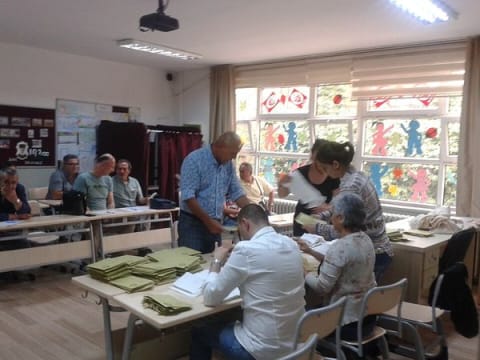
The referendum of 16 April 2017 abolishes the office of prime
minister and folds the executive into the presidency, on 51.4
percent
-
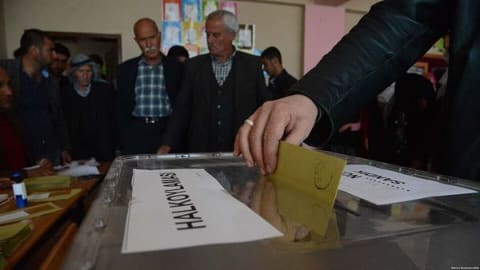
It is held under the state of emergency, and the electoral
board decides in the middle of the count to accept ballots
with no official stamp
|
Score 3 of 3
-
The Istanbul mayoral election of 31 March is annulled by the
electoral board after his party asks for it
-
The rerun on 23 June is lost by a much wider margin, and that
result is allowed to stand
|
Score 3 of 3
-
He runs again in 2023 although his own constitution allows
two terms, on the argument that the clock restarted in 2018
-
Monitors find a vote that is free to cast and not fair to
contest, with the state's money and airtime on one side
|
Score 3 of 3
-
Istanbul University annuls his 1994 degree on 18 March 2025
over a transfer he made in 1990, and since the constitution
requires a president to have finished higher education, the
leading challenger is barred five days before his party names
him
-
An Ankara appeal court annuls on 21 May 2026 the congress that
elected the main opposition party's leadership, and puts back
the leader its own members had voted out
|
 Indicator 2
Denial of the legitimacy of political opponents |
Score 1 of 3
-
The pressure runs the other way: it is his own party that the
courts and the army treat as illegitimate, and in 2008 it
comes one vote short of being banned
-
The Ergenekon case opens after an arms cache is found in June
2007: and the file grows to hold journalists and academics; the verdicts are annulled in 2016 for want of proof the network existed
|
Score 2 of 3
-
Hundreds of officers are arrested and tried in these years on evidence courts later found to be fabricated, with the verdicts in 2012 and 2013
-
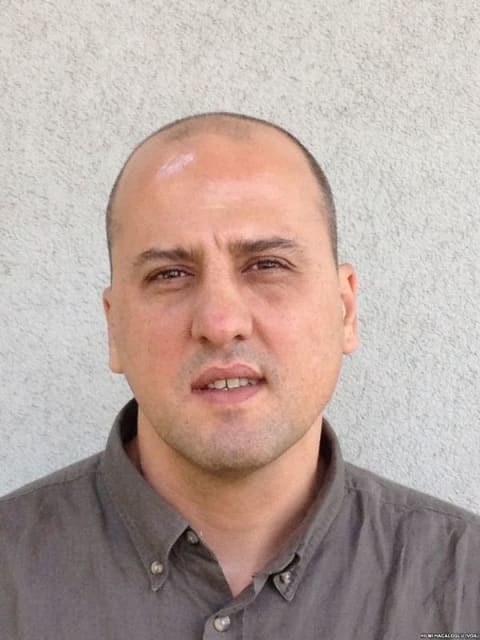
Ahmet Şık is jailed in March 2011 over a book about police
infiltration that has not been published yet
|
Score 2 of 3
-
The Gezi protesters are called çapulcu, looters, and blamed
on an interest rate lobby and on foreign hands
-
The corruption file is recast as a coup staged by a parallel
state inside the bureaucracy
|
Score 3 of 3
-
By December 2017 at least 152,000 public servants have been dismissed
under the emergency decrees for alleged links to the Gülen movement, most with no hearing
-
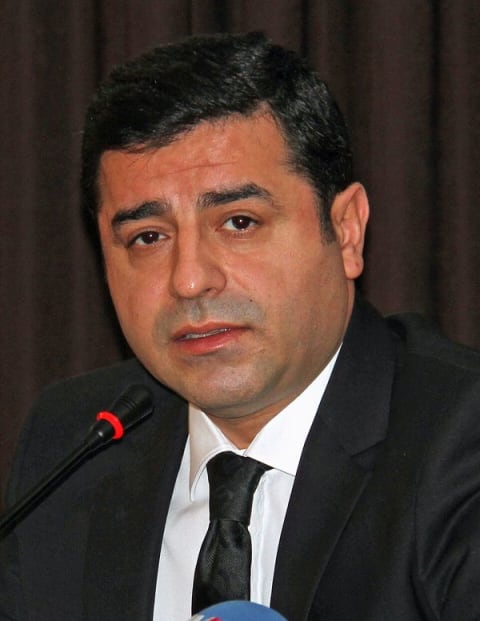
The HDP is treated as a wing of an armed group, and its
co-leaders Demirtaş and Yüksekdağ are arrested in November
2016
|
Score 3 of 3
-
Voting No in the referendum is described from the platform as
siding with terrorists
-
Osman Kavala is arrested in October 2017 and held for years
without a conviction
|
Score 3 of 3
-
Elected HDP mayors in Diyarbakır, Mardin and Van are removed
within months of the vote and replaced by state appointed
trustees
-
İmamoğlu is later prosecuted for insulting the officials who
annulled his election, and given a prison sentence and a
political ban
|
Score 3 of 3
-
Kavala is still serving aggravated life, four years after the European Court of Human Rights ordered his release
-
Demirtaş stays in prison for years after the European Court
of Human Rights orders his release
|
Score 3 of 3
-
The indictment of 11 November 2025 runs to about 3,900 pages,
names 402 suspects and asks 2,352 years for İmamoğlu on 142
counts, the charge at the head of them being that he ran a
criminal organisation
-
He is jailed on 23 March 2025, the same day an opposition
primary names him its presidential candidate with 14.85
million votes cast for him
-
An Istanbul court sentences him on 11 September 2026 to two
years and one month in prison, with a ban from political
office, for insulting a public official, the then mayor of
Tuzla, in 2022; he had been acquitted of it twice before, and
the sentence takes effect only if upheld on appeal
|
 Indicator 3
Toleration or encouragement of violence |
Score 1 of 3
-
Safeguards against torture in police custody are tightened as
part of the accession reforms, and he has no party militia
-
Hrant Dink is shot outside his newspaper in January 2007, and
police officers are later photographed posing with his
teenage killer
-
Three Christian publishers have their throats cut in Malatya
in April 2007
|
Score 2 of 3
-
Thirty four villagers, most of them teenagers, are killed by
an air strike at Roboski in December 2011, and nobody is ever
prosecuted for it
-
The Kurdish opening of 2009 tries to end a twenty five year war by talking, and stalls
|
Score 2 of 3
-
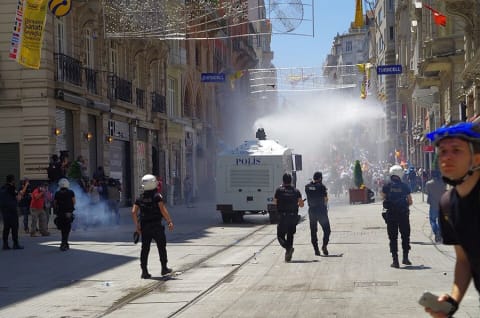
Police clear Gezi Park with tear gas and water cannon; seven people are killed over the summer, and Berkin Elvan, a boy hit in the head by a gas canister in June, dies after nine months in a coma
-
Erdoğan praises the police response and tells reporters he is barely keeping at home the half that voted for him
|
Score 3 of 3
-
Kurdish towns are put under round the clock curfew in 2015
and 2016, and much of Cizre and the old centre of Diyarbakır
is destroyed
-
Soldiers who surrender on the night of the coup are beaten on
camera, and torture in detention is documented by United
Nations investigators
|
Score 2 of 3
-
His bodyguards beat protesters outside the Turkish
ambassador's residence in Washington in May 2017, and are
indicted for it
-
Two Gezi deaths have brought convictions, in 2014 and 2015, and the rest have brought none
|
Score 2 of 3
-
The Saturday Mothers, who have gathered at Galatasaray Square since 1995 apart from a ten year break, were cleared from it with gas at their 700th vigil in 2018 and kept out of it for five years; since November 2023 up to ten are let in each week, and the square is still fenced off
-
The Istanbul pride march is banned every year and broken up
with gas and rubber bullets
|
Score 2 of 3
-
May Day marches to Taksim are banned and broken up year after
year
-
The nationalist politician Sinan Ateş is shot dead in Ankara
in December 2022, and the trial reaches into a party allied
to the government
|
Score 2 of 3
-
Police break up the largest protests since Gezi with gas and
rubber bullets in March 2025, and about two thousand people are
detained
-
Police enter the main opposition party's own headquarters on
24 May 2026 with tear gas and rubber bullets, to remove the
leadership the court had voided three days earlier
-
Parliament passes a law on 10 August 2026 that suspends
prosecutions and sentences of PKK members for five or ten
years, once the state confirms the PKK has disbanded and
handed over its weapons; intentional killings are excluded
|
 Indicator 4
Readiness to curtail civil liberties and the press |
Score 1 of 3
-
The death penalty is written out of the constitution in 2004 and the state security courts are abolished in 2004, and
broadcasting in Kurdish is legalised
-
The internet law of 2007 lets an agency block a website with
no court behind it, and insulting Turkishness is still a
crime that Orhan Pamuk and Hrant Dink were both charged with
|
Score 2 of 3
-
Journalists start being arrested in numbers under anti-terror law, and by the 2012 count Turkey is the largest jailer of journalists in the world, most of them held under anti-terror law
-
The Doğan group is served a tax penalty of billions of
dollars in 2009 and sells Milliyet and Vatan in 2011
|
Score 2 of 3
-
One of the main news channels runs a cookery show while the square is being cleared, and the penguin documentary at one in the morning, and hundreds of journalists lose
their jobs over the coverage
-
Twitter is blocked in March 2014 as recordings from the corruption file spread, and YouTube days later over a leaked security meeting
|
Score 3 of 3
-
Zaman, the country's biggest newspaper, is taken over by
court appointed trustees on 4 March 2016 and comes out
pro-government two days later
-
More than 150 outlets are shut by decree after July, and
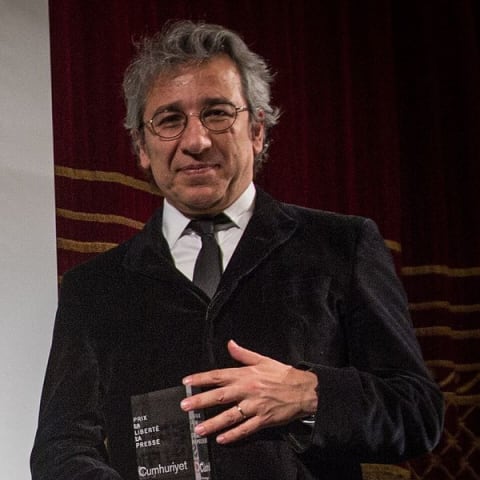
Cumhuriyet's editors are arrested in November
|
Score 3 of 3
-
Wikipedia is blocked in April 2017 and stays blocked for
nearly three years
-
The Doğan group, the last large independent broadcaster, is
sold to a pro-government conglomerate in 2018
|
Score 3 of 3
-
Insulting the president, a charge barely used before 2014,
now produces more than a hundred thousand investigations in
six years
-
Close to nine in ten national outlets are owned by people
close to the government
|
Score 3 of 3
-
The disinformation law in force since October 2022 makes spreading false information a crime of up to three years, and is used against journalists through the 2023 campaign
-
State television gives him hours of campaign coverage and his
main opponent minutes
|
Score 3 of 3
-
Eleven journalists covering the March 2025 protests are among
those detained, and the BBC's correspondent is held for
seventeen hours and deported
-
The broadcasting council takes Sözcü TV off the air for ten
days over its live coverage, and orders programmes off Halk
TV and Tele 1
-
Police raid seven LGBT rights groups, two HIV support groups,
bars and activists' homes from 12 and 13 September 2026, on
orders from prosecutors in Istanbul, Ankara, İzmir, Aydın and
Mersin; Human Rights Watch counts at least 112 people
arrested by 18 September
|
 Indicator 5
Who could still hold him to account
Added, not from the book |
Score 1 of 3
-
The army tries to veto a presidency in April 2007 and loses;
the voters back him in July instead
-
A Constitutional Court that can dissolve his party, a
president who vetoes his bills, and accession talks whose
conditions he wants to meet
-
Not all of the things holding him to account are elected,
which is why this cell is not a zero
|
Score 2 of 3
-
The chief of the general staff and the land, naval and air commanders resign together in July 2011, and the gendarmerie commander is promoted over them and nothing follows: the army has stopped being a veto
-
The Gülen network inside the police and the courts is now the
only power in the state he does not control
-
Voters still count, which is why the referendum has to be won
|
Score 2 of 3
-
The street stops him for a fortnight in June, and then it
does not
-
The prosecutors who could have charged his ministers and his son in December are moved before they can
-
Voters are still the real hurdle, and he clears it: elected
president directly in August 2014
|
Score 3 of 3
-
The coup attempt is beaten by crowds in the street, and the
emergency that follows removes what the crowds had saved
-
Dismissal is by decree, and for months there is nobody left to
appeal to
-
The Gülen network, his ally and then his rival, is gone from
the state
|
Score 3 of 3
-
Parliament loses the interpellation and the oral question, and may put only written ones to ministers, and the
presidency gains the power to legislate by decree
-
The main opposition answers with a 450 kilometre march from
Ankara to Istanbul, because a march is what is left
|
Score 2 of 3
-
The ballot box still bites: Istanbul, Ankara and İzmir go to
the opposition, and Istanbul goes twice
-
Nothing inside the state refuses him. The courts, the
electoral board and parliament do not
|
Score 2 of 3
-
He loses the local elections of March 2024, his party comes second nationwide for the first time since it was founded, and the national result stands even though two Kurdish mayoralties do not
-
When the Constitutional Court orders an elected MP released in
2023, the court of cassation refuses and files criminal
complaints against the constitutional judges instead
|
Score 3 of 3
-
The man who beat his party at the ballot box in 2019 and 2024
spends the whole period in prison, and a court hands the
opposition party back to a leader its members had removed
-
Ninety one members of parliament leave to found a new party in
July 2026, so an opposition still sits in the chamber, but it
got there without an election
-
The Grand Chamber of the European Court of Human Rights rules
on 25 August 2026 that Kavala's conviction is null and void
and that he must be released at the earliest possible date;
on 11 September he is still in prison
|