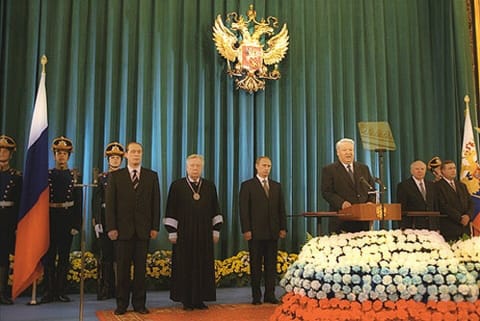
2000 · Year 0
Putin takes office. Within a year NTV, the largest independent national channel, is taken from its owner through debt claims.
Serious and repeated violation
Photo: Presidential Press and Information Office, CC BY 4.0, Wikimedia CommonsFailed Democratic Experiments
One scorecard per dead democracy. Rows one to four are the indicators of authoritarian behavior that Steven Levitsky and Daniel Ziblatt use as a litmus test. Row five is ours: who could still hold them to account that year. Columns are checkpoints across their time in power. Every cell shades the indicator at that moment, from cream to oxblood, and names the events behind the shade.
The darker the cell, the further gone the indicator that year. Events set in bold are the turning points: the moment in that cell where something stopped being possible to undo.
Scroll the table sideways for the later years| Indicator | 2000Year 0 | 2004Year 4 | 2008Year 8 | 2012Year 12 | 2014 to 2016Years 14 to 16 | 2020 to 2022Years 20 to 22 | 2023 to 2024Years 23 to 24 | 2025 to 2026Years 25 to 26 |
|---|---|---|---|---|---|---|---|---|
| Indicator 1 Rejection of the democratic rules of the game |
Score 1 of 3
|
Score 2 of 3
|
Score 2 of 3
|
Score 3 of 3
|
Score 3 of 3
|
Score 3 of 3
|
Score 3 of 3
|
Score 3 of 3
|
| Indicator 2 Denial of the legitimacy of political opponents |
Score 1 of 3
|
Score 2 of 3
|
Score 2 of 3
|
Score 2 of 3
|
Score 3 of 3
|
Score 3 of 3
|
Score 3 of 3
|
Score 3 of 3
|
| Indicator 3 Toleration or encouragement of violence |
Score 1 of 3
|
Score 2 of 3
|
Score 2 of 3
|
Score 2 of 3
|
Score 3 of 3
|
Score 3 of 3
|
Score 3 of 3
|
Score 3 of 3
|
| Indicator 4 Readiness to curtail civil liberties and the press |
Score 2 of 3
|
Score 2 of 3
|
Score 2 of 3
|
Score 3 of 3
|
Score 3 of 3
|
Score 3 of 3
|
Score 3 of 3
|
Score 3 of 3
|
| Indicator 5 Who could still hold him to account Added, not from the book |
Score 1 of 3
|
Score 2 of 3
|
Score 2 of 3
|
Score 3 of 3
|
Score 3 of 3
|
Score 3 of 3
|
Score 3 of 3
|
Score 3 of 3
|
2000 · Year 0
Putin takes office. Within a year NTV, the largest independent national channel, is taken from its owner through debt claims.
Serious and repeated violation
Photo: Presidential Press and Information Office, CC BY 4.0, Wikimedia Commons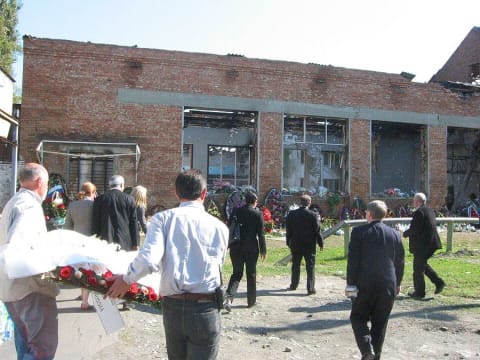
2004 · Year 4
After the Beslan school siege, governors stop being elected and are appointed from Moscow instead.
Serious and repeated violation
Photo: Office of Congressman Tom Tancredo, Public domain, Wikimedia Commons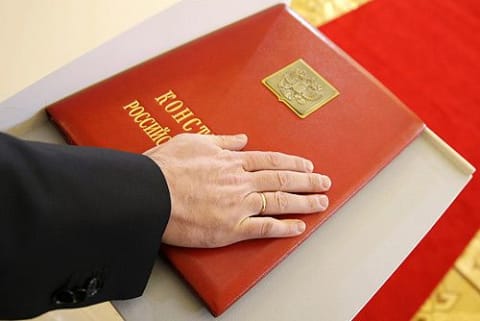
2008 · Year 8
Medvedev swears the oath on the constitution. The term limit still binds on paper, so the presidency goes to him for four years and then comes back.
Serious and repeated violation
Photo: Presidential Press and Information Office, CC BY 4.0, Wikimedia Commons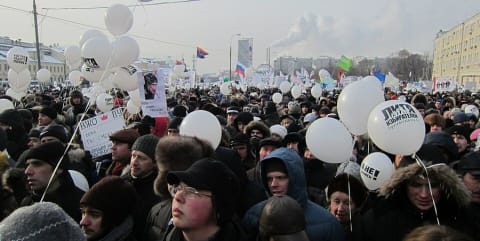
2012 · Year 12
A Duma vote marked by fraud brings the largest crowds since the Soviet collapse, and the Bolotnaya prosecutions follow.
Fully authoritarian
Photo: Bogomolov.PL, CC BY-SA 3.0, Wikimedia Commons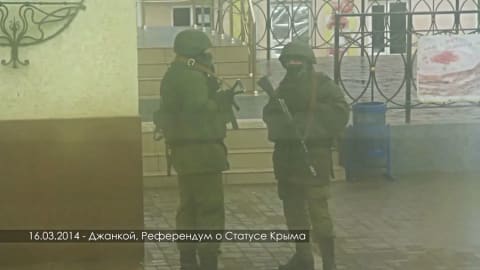
2014 to 2016 · Years 14 to 16
Crimea is annexed after a referendum nobody recognizes. A year later Boris Nemtsov is shot beside the Kremlin.
Fully authoritarian
Photo: Юрий Дейнека, CC BY 3.0, Wikimedia Commons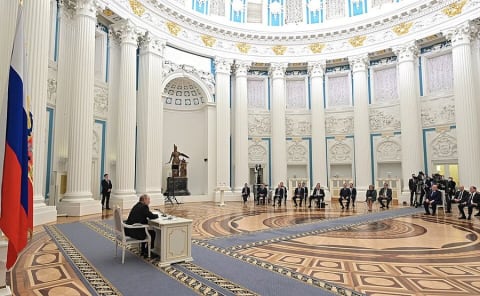
2020 to 2022 · Years 20 to 22
The Security Council, 21 February 2022, called to recognise the two Donbas republics: officials are filmed agreeing one by one, three days before the invasion. The recording was made hours earlier and edited.
Fully authoritarian
Photo: Администрация Президента России, CC BY 4.0, Wikimedia Commons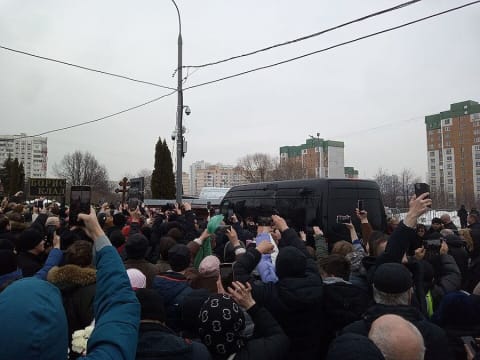
2023 to 2024 · Years 23 to 24
Alexei Navalny dies in an Arctic penal colony in February 2024. At his funeral in Moscow on 1 March, a crowd holds up phones as the hearse reaches Borisovskoye cemetery.
Fully authoritarian
Photo: Акутагава, CC BY 4.0, Wikimedia Commons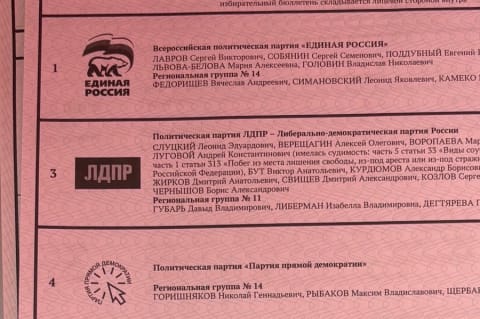
2025 to 2026 · Years 25 to 26
A federal ballot for the Duma election of September 2026. Line 2 was Yabloko's until the Supreme Court struck its list off in August, so the ballot goes from United Russia at 1 straight to 3. United Russia wins 349 of 450 seats.
Fully authoritarian
Photo: Мудря, CC0, Wikimedia CommonsThree people who did the most to end competitive elections in Russia, three who warned earliest and kept warning, and four national votes of the Putin years.
Ranked by what their decisions made possible, not by how well known they are. Vladislav Surkov, first deputy head of the presidential administration from 1999 to 2011 who promoted the idea of "sovereign democracy", is left out: he designed how the system was managed, but he could not appoint a president or sign a law.
1 · Most responsible
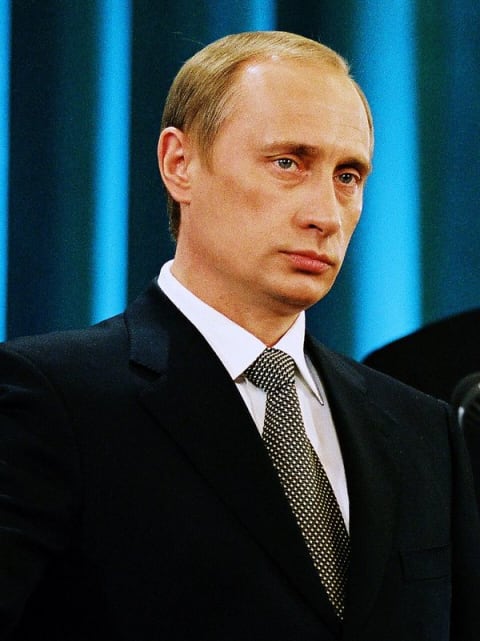
Vladimir Putin
Prime minister from 9 August 1999, acting president from 31 December 1999, president 2000 to 2008 and from 2012
In his first term NTV, the largest independent national channel, was taken from its owner through Gazprom's debt claims, and in December 2004, after the Beslan school siege, he signed the law that ended the direct election of governors. He came back to the presidency in 2012, and on 14 March 2020 signed the constitutional amendments that reset his count of terms and let him stand twice more, to 2036.
Why firstHe held power throughout and took each of these steps himself.
1999 to 2026
Photo: Presidential Press and Information Office, 7 May 2000, kremlin.ru, CC BY 4.0, Wikimedia Commons
2
Boris Yeltsin
President of Russia, 1991 to 31 December 1999
Dissolved parliament by decree on 21 September 1993, and troops loyal to him stormed the parliament building on 4 October. The constitution approved on 12 December 1993 greatly expanded the president's powers. He appointed Putin prime minister on 9 August 1999, named him his preferred successor, and resigned on 31 December 1999, which made Putin acting president three months before the election.
Why secondHe chose Putin and handed him the office early, and his 1993 constitution gave that office the powers Putin later used.
September 1993 to 31 December 1999
Photo: ITAR-TASS, 13 September 1999, kremlin.ru, CC BY 4.0, Wikimedia Commons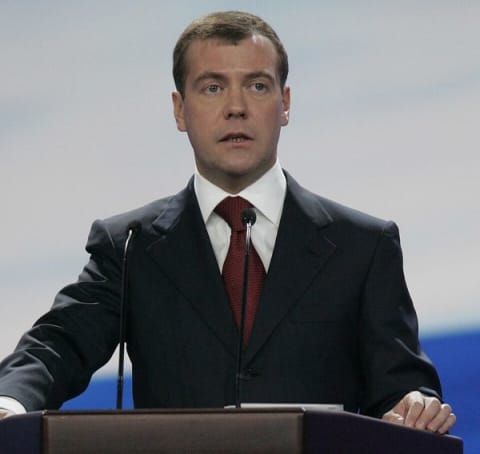
3
Dmitry Medvedev
President 2008 to 2012; prime minister 2012 to 2020
Took office on 7 May 2008 and made Putin prime minister. On 30 December 2008 he signed the amendment that lengthened the presidential term from four years to six, first applied in 2012. On 24 September 2011 he proposed Putin as the ruling party's candidate for president and said the two had agreed on it long before.
Why thirdHe held the seat for one term and handed it back, so the limit of two terms in a row did not end Putin's rule.
7 May 2008 to 7 May 2012
Photo: Presidential Press and Information Office, 22 January 2008, kremlin.ru, CC BY 4.0, Wikimedia CommonsThe earliest three who raised the alarm and kept raising it for years, chosen by how early they started and how long they held on. Lyudmila Alexeyeva is left out because in 2000 she joined the commission advising Putin on human rights; her open protests came later.

Warned from 1999
Anna Politkovskaya
Special correspondent of the Moscow paper Novaya Gazeta from June 1999
Reported on abuses by Russian forces in the second Chechen war, and set out her case against the state Putin was building in the book Putin's Russia (2004).
What it costHeld by military security in Chechnya for three days in February 2001 and threatened with shooting. Fell ill after drinking tea on a flight to Beslan in September 2004. Shot dead in the lift of her Moscow apartment block on 7 October 2006. Five men were convicted in 2014; no one was tried for ordering the killing.
1999 to 2006
Photo: Blaues Sofa, 17 March 2005, CC BY 2.0, Wikimedia Commons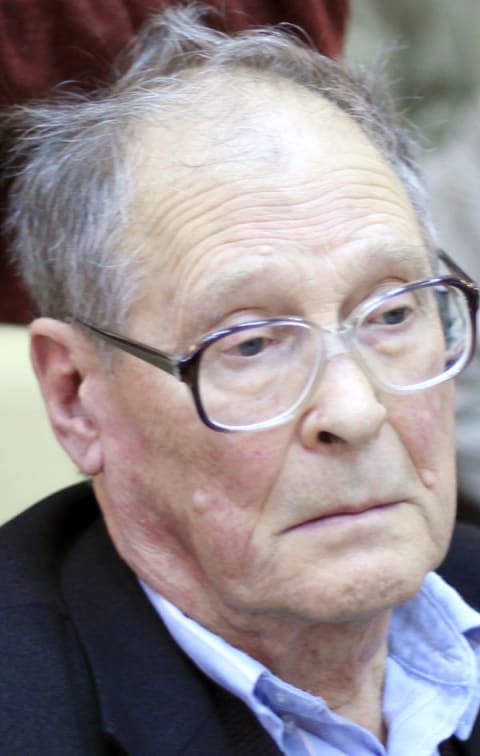
Warned from 2000
Sergei Kovalev
Soviet political prisoner 1974 to 1984; Duma deputy 1993 to 2003; for many years a co-chairman of Memorial
On 10 February 2000, six weeks before the election, he wrote in The New York Review of Books that Putin would most likely build "an authoritarian-police regime that will preserve the formal characteristics of democracy". In 2002 he set up a public commission on the 1999 apartment bombings, in March 2010 he signed the appeal "Putin must go", and in 2014 he spoke against the annexation of Crimea.
What it costHis commission stopped working after one member, Sergei Yushenkov, was shot dead on 17 April 2003 and its lawyer, Mikhail Trepashkin, was arrested. Kovalev died in Moscow on 9 August 2021. The Supreme Court ordered Memorial closed on 28 December 2021.
2000 to 2021
Photo: Skilpaddle, 15 January 2011, CC BY 3.0, Wikimedia Commons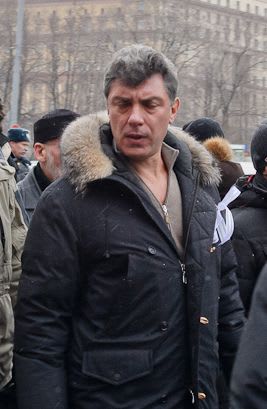
Warned from 2004
Boris Nemtsov
First deputy prime minister 1997 to 1998; from 2008 a leader of the opposition movement Solidarnost
In January 2004 he co-wrote a newspaper article warning of an impending Putin dictatorship, and that month helped found the opposition group Committee 2008. On 13 December 2008 he founded Solidarnost with Garry Kasparov, and in December 2011 he took part in the rallies against fraud in the Duma election.
What it costArrested at a rally on 31 December 2010 and jailed for 15 days. Shot dead from behind on the Bolshoy Moskvoretsky Bridge beside the Kremlin on 27 February 2015. Five men born in Chechnya were convicted in June 2017.
2004 to 2015
Photo: Evgeniy Isaev, 10 December 2011, CC BY 2.0, Wikimedia CommonsFour national votes. Putin won each with a majority of the ballots cast. International observers reported unequal access to television in 2000, a process that did not meet democratic principles in 2004, and a campaign skewed toward one candidate in 2012. The 2020 vote came after the amendments had been signed into law, and its count is disputed.
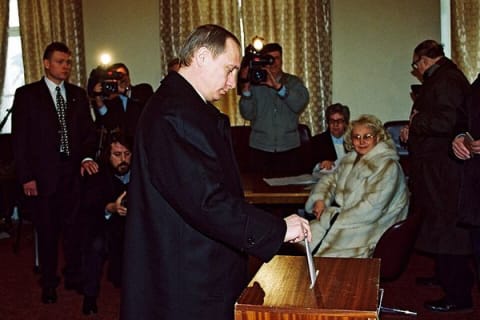
26 March 2000
Presidential election, held three months early after Yeltsin resigned
52.9 percentPutin, elected in the first round. Turnout 68.6 percent.
Observers from the Council of Europe found that unequal access to television made the campaign partly unfair. The vote turned the acting president into an elected one.
Majority, unequal campaign
Photo: Putin votes at polling station 2026, Gagarinsky district, Moscow, on election day. Presidential Press and Information Office, kremlin.ru, CC BY 4.0, Wikimedia Commons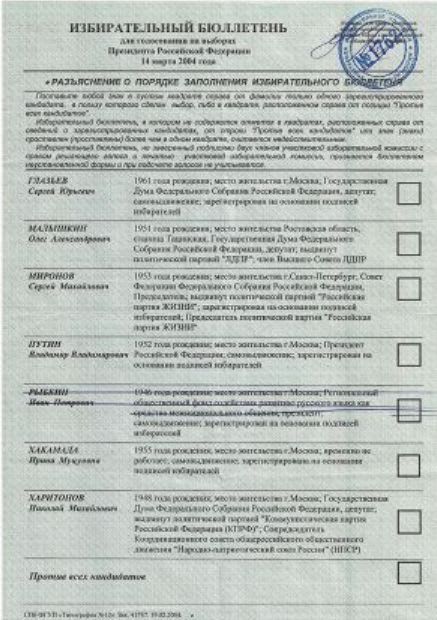
14 March 2004
Presidential election
71.3 percentPutin, re-elected. The Communist and LDPR party leaders did not stand. Turnout 64.3 percent.
OSCE observers said the process did not adequately reflect the principles of a healthy democratic election, and that state media showed clear bias for the incumbent. Later that year, after Beslan, the election of governors was abolished.
Not a fair contest
Photo: the ballot paper of 14 March 2004. Central Election Commission of Russia, Public domain, Wikimedia Commons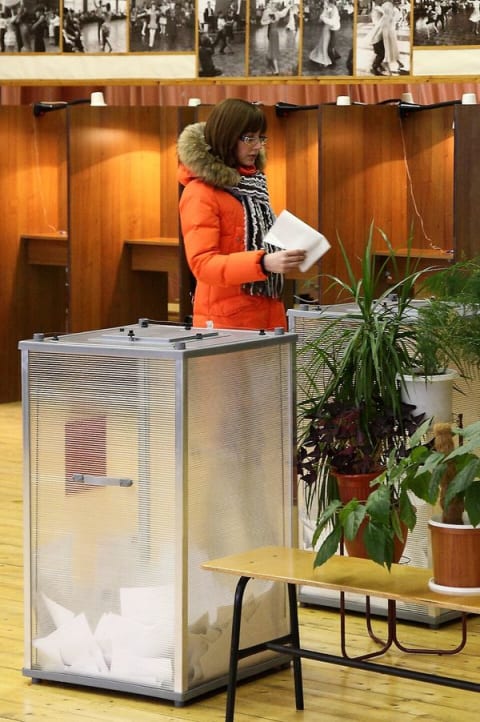
4 March 2012
Presidential election, the first for a six year term
63.6 percentPutin, back after four years as prime minister. Turnout 65.3 percent.
OSCE observers found the conditions clearly skewed in favour of one candidate, with state resources mobilised in his support. It came three months after the protests against fraud in the Duma election.
Majority, skewed campaign
Photo: a polling station in Severodvinsk on election day. Schekinov Alexey Victorovich, CC BY-SA 3.0, Wikimedia Commons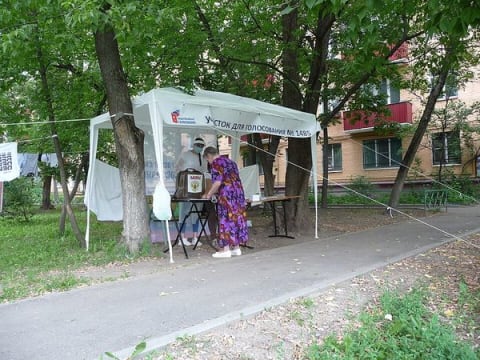
25 June to 1 July 2020
Nationwide vote on constitutional amendments, including the reset of Putin's terms
77.9 percentyes. Turnout 68.0 percent.
Putin had signed the amendments into law on 14 March. Voting ran from 25 June to 1 July, also at home and at outdoor points, with no minimum turnout. The election monitor Golos called it rigged from the start, and the statistician Sergei Shpilkin estimated that up to 22 million votes may have been fraudulent.
Count disputed
Photo: a mobile voting point in Lyubertsy, 27 June 2020. DocVinnik, CC BY-SA 4.0, Wikimedia CommonsThe press went first. Indicator 4 hits a score of 2 inside the first year, while the formal rules of elections in indicator 1 were taken apart slowly enough to keep the whole thing deniable for more than a decade. Referees and newsrooms early, elections last, is exactly the sequence Levitsky and Ziblatt describe. Row 5 tells the same story from the other side: the list of people who could still make him answer for something gets shorter every column, from the oligarchs and the governors, to voters, to the street, to nobody at all. Nothing in a single row looks like the death of a democracy. The five rows read together do.
The numbers are not in the book. Levitsky and Ziblatt supply the four indicators and the argument; the four steps of shading here are Claude applying that framework to the historical record, one cell at a time, and they are open to argument. The events named in each cell are the evidence, so you can disagree with a score rather than take it on trust. Indicator 5 is not in the book at all: it asks who could still make them answer for something that year, and it is shaded the same way, where the darkest cell means answerable to nobody. Dates in a cell are the dates of the event, which sometimes sit slightly before the column that holds them.
Framework from How Democracies Die by Steven Levitsky and Daniel Ziblatt, 2018. Part of the melting pot.