 Indicator 1
Rejection of the democratic rules of the game |
Score 2 of 3
-
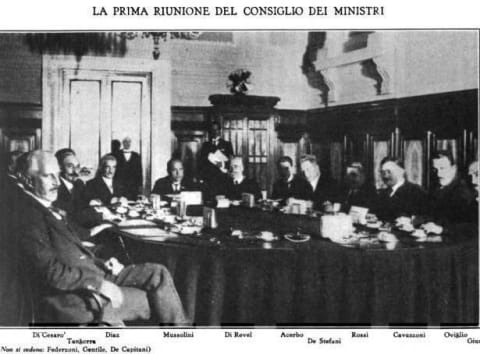
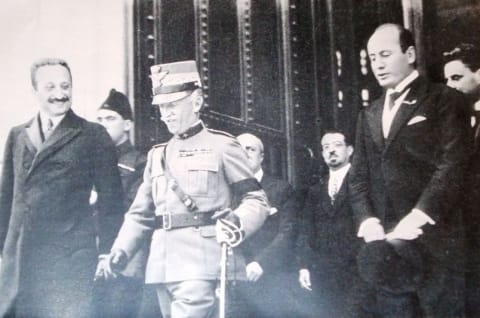
The king refuses on 28 October to sign the state of siege that Facta's resigned cabinet has approved. He gives the mandate that afternoon to Salandra, and when the fascists refuse to serve under him he calls Mussolini to Rome on the 29th and swears in his government on 31 October
-
About sixteen thousand men are concentrated outside Rome, armed mostly with rifles handed over by soldiers or taken from army stores, and the Rome garrison has a plan in force to hold the city, rail junctions cut and blocks on the bridges, which is stood down on the king's orders
-
He is appointed at the head of a party holding 37 of the 535 seats in the Chamber, 35 of them won the year before on lists shared with the liberals and two on fascist lists of its own
|
Score 2 of 3
-
On 16 November he tells the Chamber he could have made of it a bivouac for his squads and shut it, and that he chose not to, at least in this first period. The next day it votes him confidence, 306 to 116
-
On 25 November it votes him full powers over taxation and the administration until the end of 1923, by 215 to 80 in a secret ballot after backing the government 275 to 90 on the motion before it, and the Senate agrees
-
He governs in coalition with both chambers still in being, which is the whole difference from the German case
|
Score 3 of 3
-
The Acerbo law gives the list with the most votes two thirds of the seats, 356 of the 535, provided it has at least a quarter of the votes, and shares the remaining 179 out proportionally. The Chamber passes it on 21 July by 223 to 123, the Senate on 14 November by 165 to 41, and the king signs it on 18 November
-
This is a parliament voting on how the next parliament will be composed, and voting to make it his
|
Score 3 of 3
-
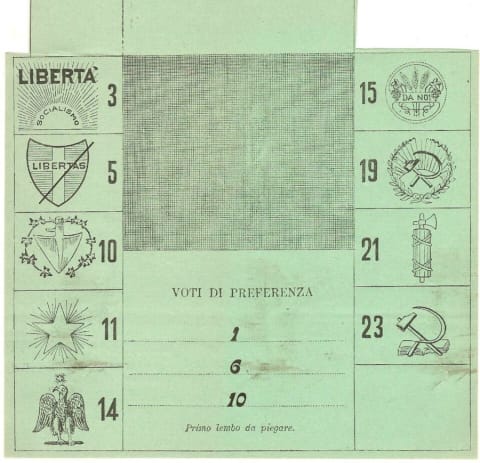
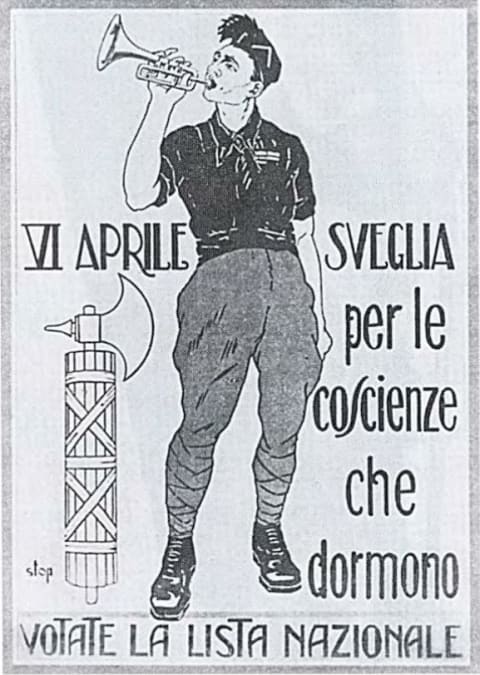
The election of 6 April is fought under the new law. The National List takes about 60 percent of the vote and 355 seats, and with a second list running alongside it the government holds 374 of the 535
-
Turnout is about 64 percent and the opposition parties return about 160 deputies between them
|
Score 3 of 3
-
On 30 May Matteotti stands in the Chamber and challenges the validity of the majority's election, arguing that no Italian voter had been free to decide
-
The Chamber refuses even to send the returns back to its elections committee, 285 to 57 with 42 abstentions. Eleven days later he is dead
|
Score 3 of 3
-
The Aventine deputies stay out of the Chamber for the rest of the year, the communists excepted, and appeal to the king instead of voting. The Chamber sits without them, and though Giolitti crosses to the opposition over the press decrees in November his majority still holds
-
The one instrument the opposition still holds, its votes in the chamber, is the one it declines to use
|
Score 3 of 3
-
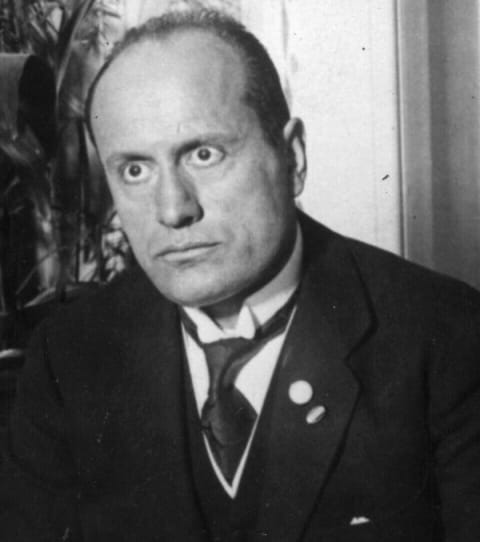
On 3 January he tells the Chamber that he takes upon himself, alone, the political, moral and historical responsibility for everything that has happened, and that if fascism has been a criminal association the responsibility is his, because he created the climate that produced the violence
-
He then asks formally whether anyone, in the Chamber or outside it, wishes to use article 47 of the constitution, which lets the Chamber accuse a minister before the high court. Nobody does
-
The Aventine opposition is not in the room to answer, because it walked out in June. The communists had ended their secession on 26 November and Giolitti, by then in opposition, was in the chamber. Neither moves
|
Score 3 of 3
-
The law of 24 December 1925 replaces the president of the council with a head of government appointed and dismissed by the king, answerable to the king and not to parliament, and nothing can go on either chamber's agenda without his consent
-
Elected councils go: from February 1926 a podestà appointed from Rome replaces the mayor and the council, at first only in communes of five thousand people or fewer and from September everywhere
-
On 9 November 1926 the Chamber declares 123 opposition deputies to have forfeited their seats: the Aventine secessionists who walked out in June 1924, together with the communists who had gone back to their benches
|
 Indicator 2
Denial of the legitimacy of political opponents |
Score 3 of 3
-
The two years behind the appointment are not an argument with the socialists but a campaign against their institutions: in the Po valley in the first half of 1921 alone, on Candeloro's count, which he calls certainly incomplete, 119 chambers of labour, 107 cooperatives and 141 socialist or communist branches were wrecked or burned
-
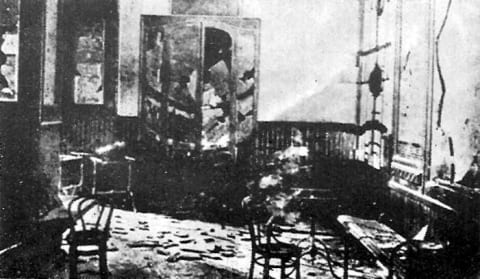
In Bologna the socialists win the council in the autumn of 1920 and never take office: on 21 November 1920 seven of their supporters are killed in the crossfire of fascists, police and their own guards' grenades and three more die later of their wounds, a liberal councillor of the minority is shot in the chamber, and a prefect's commissioner is put in over them
-
At Naples on 24 October, six days before the king sends for him, he tells a fascist rally that they mean to govern Italy
|
Score 3 of 3
-
The Popular Party's ministers are removed from the government on 17 April 1923, four days after the party's congress at Turin renews the alliance only on condition that no majority premium is introduced: a partner in government is removed for a vote taken at its own conference
-
The Nationalist Association signs a pact of fusion with the fascist party on 26 February 1923, its own blue shirt squads having already been dissolved into the new state militia on 1 February
-
The party's Grand Council, convened for the first time on 15 December 1922 and constituted as a standing body in January 1923, settles the militia and the principle of a majority premium before either goes near the cabinet
|
Score 3 of 3
-
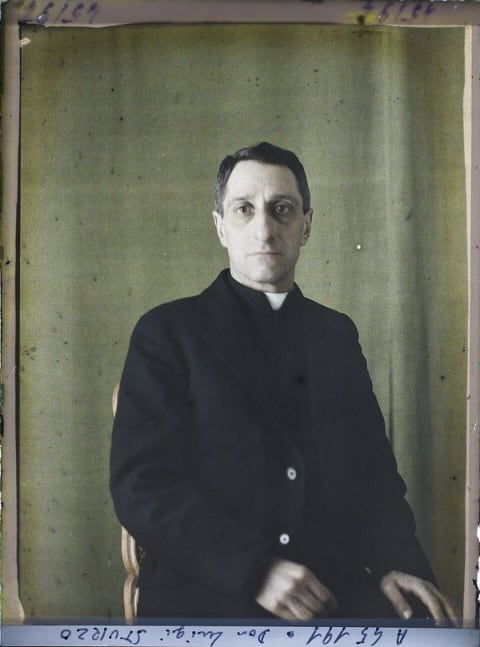
Sturzo resigns as secretary of the Popular Party on 10 July 1923 under pressure that includes the Vatican's, and the party that had two ministers in his first cabinet has neither them nor him
-
Some of its deputies vote for the electoral law anyway; one of them, Cavazzoni, is later expelled from the party for it
|
Score 3 of 3
-
Giovanni Amendola, a liberal deputy and the most persistent critic in the Chamber, is beaten in a Rome street by four men on 26 December 1923, three months before the vote
-
Opposition meetings are broken up, the posting of bills is stopped, print shops are attacked and papers burned through the campaign, and in Genoa on 27 January 1924 the fascists beat the opposition deputies Enrico Gonzales and Giuseppe Canepa
|
Score 3 of 3
-
The man killed is the secretary of a party that sits in parliament, and he is killed for what he said in the chamber on 30 May and for what he had announced he would say there on 11 June
-
Five men are named within days and the police take the first of them on 12 June. An investigating magistrate, Mauro Del Giudice, then takes the case off the government's hands and by 18 June has the party's administrative secretary arrested too, so nobody can pretend the killing is a private quarrel
|
Score 3 of 3
-
The party's provincial bosses want a new round of violence rather than a settlement, and on 31 December about forty consuls of the militia come to him and tell him to have done with legality
-
The communists abandon the walkout in November, Luigi Repossi returning alone on the 12th to commemorate Matteotti and the whole group on the 26th, so the opposition is now divided about whether to be in the building at all
|
Score 3 of 3
-
In the three days after the speech the prefects close 95 clubs and meeting places, 150 licensed premises and 25 organisations they call subversive, dissolve 120 branches of the veterans' association Italia Libera and arrest 111 people, by the interior ministry's own count, reported to the Council of Ministers on 6 January
-
Being in opposition has become a matter for the prefect rather than for the chamber
|
Score 3 of 3
-
After the attempt on his life at Bologna on 31 October 1926 the government dissolves the opposition parties, and the law of 25 November sets up a Special Tribunal for the Defence of the State with military judges and restores the death penalty for political crimes
-
Antonio Gramsci is arrested in Rome on 8 November 1926 although he is a sitting deputy with immunity, and that tribunal sentences him in 1928
-
Matteotti's own party, the Unitary Socialists, had already been dissolved in November 1925, days after one of its members, the former deputy Tito Zaniboni, was caught planning to shoot him
|
 Indicator 3
Toleration or encouragement of violence |
Score 3 of 3
-
Two years of squad violence are on the public record before he holds any office: elected councils driven out of town halls, socialist deputies beaten and dosed with castor oil, labour halls and cooperatives burned, and prefects and police mostly standing by
-
The general strike called against that violence on 31 July 1922 is broken by the squads themselves, who take over several cities. Only at Parma and Bari are they driven back, at Parma by the Arditi del Popolo behind barricades in the Oltretorrente
-
This is why this cell is already black. Nothing about it had to be discovered later
|
Score 3 of 3
-
The squads become an organ of the state: a royal decree-law of 14 January 1923, not converted into law until 1925, creates a militia paid for by the state, operative from 1 February, whose men swear to him while the army swears to the king
-
Between 18 and 20 December 1922 squads in Turin kill eleven people, among them Pietro Ferrero of the metalworkers' union, and an amnesty of 22 December, published two days later, stops the prosecutions before they start
|
Score 3 of 3
-
Don Giovanni Minzoni, the parish priest at Argenta who had organised Catholic youth against the local squad, is beaten in the street on the night of 23 August 1923 and dies of a fractured skull before midnight; the men tried for it are acquitted in 1925
-
Speaking against the bill on 15 July, Turati tells the Chamber that it is a law whose approval is being recommended to them by three hundred thousand muskets
|
Score 3 of 3
-
Antonio Piccinini, the socialist leader in Reggio Emilia and a candidate on the party's Emilia list, is taken from his house on the evening of 28 February 1924 and killed, and his body left by the railway line. His name is still on the ballot on 6 April and draws enough preference votes for a seat, which goes to the next man because he is dead. All four men accused are acquitted at Reggio Emilia in October 1925
-
The government does not repress the campaign violence, and its own militia is on one side of it
|
Score 3 of 3
-
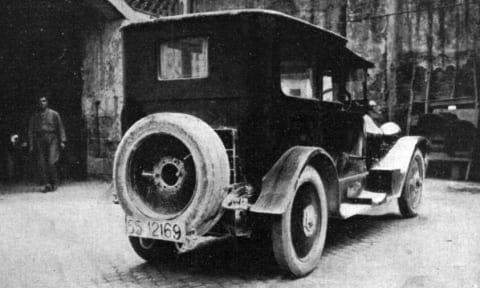
Matteotti is forced into a car on the Lungotevere Arnaldo da Brescia on the afternoon of 10 June 1924 and stabbed. His body is not found for two months
-
It is the twentieth month of the government and the killing has not stopped since 1920. This is only the one that cannot be ignored
|
Score 3 of 3
-
The body is found near Riano on 16 August, two months after the abduction, and has to be identified from the teeth
-
The militia is reorganised in August 1924 and its men are made to swear to the king instead of to him, which is offered as a concession. It is not disbanded
|
Score 3 of 3
-
The instruction goes out to the prefects on the night of 3 January, and 655 house searches follow inside three days, on the same ministry count
-
Nobody has been convicted for Matteotti, and the man who has just claimed the responsibility is still prime minister
|
Score 3 of 3
-
Giovanni Amendola, put into a car by the fascist federal secretary of Lucca on the promise of an escort and then ambushed past Pieve a Nievole in Tuscany on 20 July 1925 and beaten through the smashed window, dies at Cannes on 7 April 1926
-
Piero Gobetti, beaten more than once in Turin, leaves for Paris in February 1926 and dies there on the 15th, at twenty four
-
Internment without trial, confino, is extended to political cases by the public security measures of November 1926
|
 Indicator 4
Readiness to curtail civil liberties and the press |
Score 2 of 3
-
Newspapers are among the buildings burned. The Avanti! offices in Milan were sacked and set alight on 15 April 1919, and printing works were still being wrecked in 1922
-
Nothing has been banned in law and the socialist, Catholic and liberal papers all print, though on 28 October the papers not tied to the fascists are warned off appearing the next day and several of their printing works are burned. The largest of them, the Corriere della Sera, is not yet against him
|
Score 2 of 3
-
Still nothing in law. The papers that attacked him in November are still attacking him in June, and no newspaper has been closed, though prefects can already seize an issue and suspend a paper after two seizures
-
What holds them back is arson, and the amnesty that protects the men who commit it
|
Score 2 of 3
-
A decree of 15 July 1923 lets a prefect refuse to recognise the man legally answerable for a newspaper, which is enough to close it. It is signed and then left unused for a year
-
The Corriere della Sera under Luigi Albertini is turning against him in these months and is not stopped
|
Score 2 of 3
-
The opposition press reports the campaign violence and is not shut for it: the decree that could close a paper has still not been used
-
The pressure is put on the copies rather than the licence, with papers burned and print shops attacked
|
Score 2 of 3
-
The press is first with the story and stays on it: for weeks the opposition papers print the investigation day by day, and none of them is closed for it
-
A prime minister is held responsible for a murder, in print, in Rome, and answers it from the floor of the Chamber on 13 June. This is as much as the press ever gets to say
|
Score 2 of 3
-
The decree signed in July 1923 and never used is brought into force in July 1924, four weeks after the murder, and preventive seizure of newspapers comes back with it
-
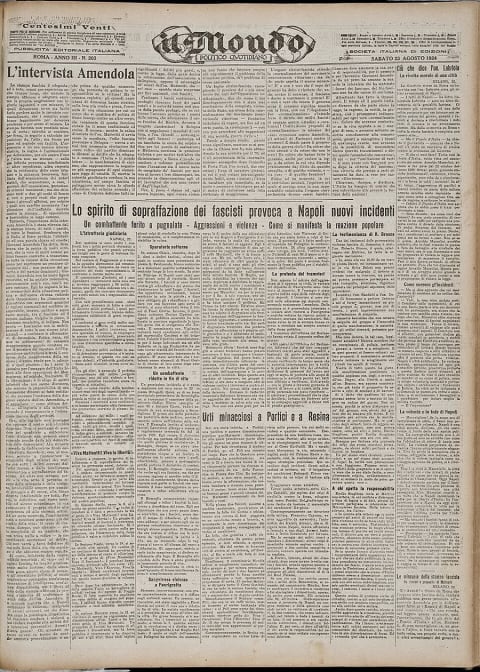
It closes nothing yet, though seizures of single issues multiply through the autumn: on 27 December Il Mondo prints Cesare Rossi's memorandum naming Mussolini as the man behind the squad, and the paper goes on printing into the new year
|
Score 2 of 3
-
The same instruction of 3 January tells the prefects to apply the press decree rigorously, the one on abuses of the periodical press that had sat largely unused since July 1924, and the seizures begin in earnest
-
The clubs and associations that could have called a meeting against him are shut in the same week
-
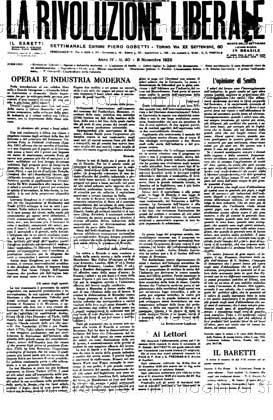
No title is closed by law yet. La Rivoluzione Liberale prints until 8 November, Albertini keeps the Corriere until the end of that month, and what ends the opposition press is the law of 31 December
|
Score 3 of 3
-
The press law of 31 December 1925 makes a newspaper unlawful unless the man responsible for it has been approved, so one refusal closes a paper
-
Luigi Albertini is removed from the Corriere della Sera on 28 November 1925 after twenty five years in the chair
-
Avanti! and l'Unità are suppressed in the measures that follow the Bologna attempt, and Il Mondo, which had printed the Rossi memorandum, is suspended with them on 31 October 1926 and has its gerenza declared forfeit on 5 November
|
 Indicator 5
Who could still hold him to account
Added, not from the book |
Score 1 of 3
-
The king holds the decision alone on 28 October and takes the other side of it: he refuses the state of siege, the troops that had begun applying it stand down, and the next day, after Salandra has failed to form a government because the fascists will not serve under him, he calls Mussolini
-
Four of the fourteen ministers are fascists, counting him. The rest are two liberals, two Catholics, two social democrats, a nationalist, an independent and two serving officers, and they believe they are the ones containing him
-
The Chamber can withdraw its confidence, by a convention rather than by the Statuto, the king can dismiss him at any time, and the army is the king's
|
Score 1 of 3
-
Both chambers could have refused and did not: confidence on 17 November by 306 to 116, full powers on 25 November by 215 to 80 in a secret ballot
-
The Popular Party's ministers leave in April, so the coalition that was meant to hold him is thinner after six months and nothing has replaced it
-
He now commands an armed force paid for by the state that does not answer to the king
|
Score 2 of 3
-
The commission that examined the electoral bill was chaired by Giolitti and much of the liberal benches voted for it: this is the old liberal governing class voting for the rules under which the government list won the next election
-
The Senate could have stopped it and passed it 165 to 41; the king could have withheld his signature and gave it
-
The Popular Party splits over the vote instead of blocking it
|
Score 2 of 3
-
Voters can still refuse him, and in the industrial north many do: the government list falls under half the vote in the northern cities, taking 36.6 percent in Turin, 36.5 percent in Venice, 38.4 percent in Milan and 47.2 percent in Genoa against 60 percent nationally. It is a minority of the voters even where it wins
-
The chamber that would judge his ministers is now two thirds his, and it is the chamber that validates its own members' elections
|
Score 2 of 3
-
Within a fortnight the government and its majority stand together behind Mussolini, while the magistrates keep the case open for another year: the police arrest the squad and a magistrate extends the inquiry beyond them to the party's administrative secretary. On 17 June Mussolini gives up the interior ministry to Federzoni, and the chief of police De Bono goes but keeps the militia command he has held since February 1923
-
The Senate votes him confidence on 26 June, 225 votes out of 252
-
From 27 June the opposition deputies stop attending, so the chamber that could have held him to account is missing them by their own decision
|
Score 2 of 3
-
In November the king is handed memoranda through Bonomi said to implicate the prime minister in the murder, and gives them back without acting
-
The courts still hold the men who took Matteotti. Three of them are convicted at Chieti in March 1926 of unintentional homicide and freed under an amnesty
-
Six months after the murder nothing has been decided, and everything that could remove him is still standing
|
Score 3 of 3
-
He dares the chamber to accuse him and it does not, the king does not move, and he promises that the situation will be clarified within forty eight hours
-
The only body that could have accused him is the one he is speaking to, and two thirds of it is his
-
This is the date historians use for the beginning of the dictatorship, and no law was passed on it
|
Score 3 of 3
-
By the law of 24 December 1925 he answers to the king and to nobody else, and the king does not use that power until July 1943
-
Strikes are unlawful from 3 April 1926 and only fascist unions may sign a contract, so the strike, which had forced governments out before 1922, can no longer be used
-
No opposition party, no opposition daily, no elected town council, and no deputy who can put anything to him that he has not agreed to. The elected provincial councils last, on paper, until the law of 27 December 1928
|